
Building Enterprise Software on a Startup Budget
For many startups, technology is both an opportunity and a challenge. Founders know that having the right software can streamline operations, improve customer experiences, and create a competitive advantage. However, when they hear terms like “enterprise software,” they often assume it requires enterprise-level budgets.
Traditionally, enterprise software development was associated with large corporations that could spend hundreds of thousands—or even millions—of dollars on custom platforms. Startups and small businesses were often forced to settle for limited tools that didn’t fully meet their needs.
Fortunately, the software development landscape has changed dramatically. Modern technologies, cloud infrastructure, agile methodologies, and flexible development models now allow startups to build enterprise-grade software without exhausting their resources.
The key is understanding how to approach software development strategically. By focusing on scalability, prioritizing features, and leveraging modern technologies, startups can build powerful software solutions that support growth while staying within budget.
What Is Enterprise Software?
Enterprise software refers to applications designed to support complex business operations at scale.
Examples include:
- Customer Relationship Management (CRM) systems
- Enterprise Resource Planning (ERP) platforms
- Inventory Management Systems
- Human Resource Management Systems
- Project Management Platforms
- Supply Chain Management Solutions
- Customer Portals
- Business Intelligence Dashboards
Enterprise software is typically characterized by:
- High reliability
- Scalability
- Strong security
- Integration capabilities
- Advanced automation
- Large user capacity
The good news is that startups don’t need to build every enterprise feature from day one.
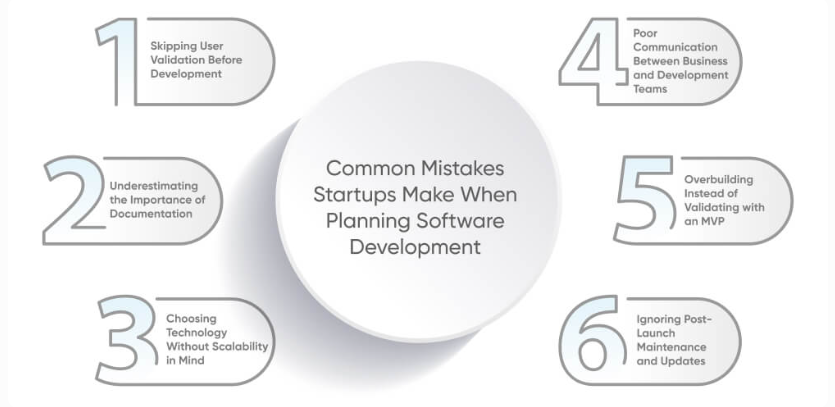
The Biggest Mistake Startups Make
Many startups approach software development with an “all-or-nothing” mindset.
They believe they must build every feature they can imagine before launching.
This often leads to:
- Overspending
- Delayed launches
- Feature bloat
- Increased complexity
- Poor user adoption
The reality is that successful software products are rarely built all at once.
The most successful startups begin with a focused solution that solves a specific problem and expand over time.
Start with an MVP
The concept of a Minimum Viable Product (MVP) is one of the most effective ways to build enterprise software on a startup budget.
An MVP includes only the essential features required to deliver value to users.
Benefits of MVP Development
- Lower development costs
- Faster time-to-market
- Early customer feedback
- Reduced risk
- Better resource allocation
Instead of investing heavily in features customers may never use, startups can validate ideas and improve products based on real-world feedback.
Example
Instead of building a complete CRM with advanced reporting, AI capabilities, workflow automation, and analytics from day one, a startup might begin with:
- Customer database
- Contact management
- Lead tracking
- Basic reporting
Additional features can be added as the business grows.
Focus on Scalability from Day One
Building on a budget doesn’t mean sacrificing future growth.
One of the smartest investments startups can make is ensuring their software architecture is scalable.
Scalable software allows businesses to:
- Add users easily
- Introduce new features
- Increase performance
- Support larger datasets
- Expand into new markets
A scalable foundation prevents expensive rebuilds later.
The goal is not to build everything now—but to build a structure that can grow.
Leverage Cloud Technology
Cloud computing has transformed software development.
Years ago, enterprise software required expensive servers, data centers, and IT infrastructure.
Today, startups can access enterprise-grade infrastructure through cloud platforms.
Benefits of Cloud Solutions
- Lower upfront costs
- Flexible pricing
- Improved reliability
- Better security
- Automatic scaling
- Reduced maintenance
Popular cloud platforms provide startups with access to the same infrastructure used by some of the world’s largest companies.
This eliminates the need for significant hardware investments.
Use Agile Development Methodologies
Traditional software development often involves lengthy planning cycles and large upfront investments.
Agile development takes a different approach.
Projects are divided into smaller phases, allowing teams to:
- Deliver features faster
- Adjust requirements
- Reduce waste
- Improve quality
- Manage budgets effectively
Why Agile Works for Startups
Startups operate in rapidly changing environments.
Agile development enables founders to adapt to market feedback without restarting entire projects.
This flexibility helps maximize every development dollar.
Prioritize Features That Drive Business Value
Not all features are equally important.
When budgets are limited, startups should focus on features that directly support business goals.
Ask questions such as:
- Does this feature improve customer experience?
- Will it generate revenue?
- Does it save time or reduce costs?
- Is it essential for operations?
Features that don’t create immediate value should be postponed.
This approach ensures resources are spent where they matter most.
Build Modular Software
A modular approach is one of the most cost-effective ways to develop enterprise software.
Instead of creating a massive system all at once, software can be built in independent modules.
For example:
Phase One
- User management
- Customer records
- Basic dashboard
Phase Two
- Automation tools
- Advanced reporting
- Integrations
Phase Three
- AI capabilities
- Predictive analytics
- Mobile applications
This phased approach allows startups to spread costs over time while continuously improving functionality.
Integrate Existing Tools Where Possible
Startups don’t need to reinvent everything.
Many enterprise-grade functions can be achieved through integration with existing platforms.
Examples include:
- Payment gateways
- Email marketing tools
- Communication platforms
- Accounting systems
- Cloud storage solutions
Using APIs and third-party integrations can significantly reduce development costs while accelerating deployment.
Invest in User Experience
One area startups should never overlook is user experience (UX).
Enterprise software often fails because users find it difficult to navigate.
A simple and intuitive interface provides benefits such as:
- Faster adoption
- Reduced training costs
- Improved productivity
- Higher customer satisfaction
Good design doesn’t necessarily require a massive budget.
In many cases, simplicity is more valuable than complexity.
Security Should Never Be an Afterthought
Budget-conscious startups sometimes treat security as something to address later.
This can be a costly mistake.
Data breaches can result in:
- Financial losses
- Legal issues
- Reputational damage
- Customer distrust
Enterprise-grade software should include:
- Data encryption
- Secure authentication
- Role-based permissions
- Backup systems
- Security monitoring
Building security into the software from the beginning is often far less expensive than fixing vulnerabilities later.
The Pay-As-You-Grow Development Model
One of the biggest trends helping startups access enterprise software is the Pay-As-You-Grow model.
Instead of investing heavily upfront, businesses can:
- Launch core features first
- Spread development costs over time
- Add functionality based on growth
- Align software investment with revenue generation
This approach significantly reduces financial pressure while enabling continuous innovation.
For many startups, it represents the ideal balance between affordability and scalability.
Avoid Technical Debt
Technical debt occurs when shortcuts are taken during development to save time or money.
Examples include:
- Poor coding practices
- Lack of documentation
- Ignoring scalability
- Weak architecture decisions
While shortcuts may appear cost-effective initially, they often result in expensive maintenance and redevelopment later.
Building software correctly from the start reduces long-term costs.
Why Custom Software Can Still Be Affordable
Many founders assume custom software is only for large corporations.
Modern development practices have changed this reality.
Affordable custom software is now possible because of:
- Cloud infrastructure
- Open-source technologies
- Agile development
- Global development teams
- Low-code tools
- Modular architecture
These innovations significantly reduce costs while maintaining enterprise-level quality.
Real Business Benefits
Building enterprise software strategically provides startups with several advantages:
Operational Efficiency
Automation reduces manual tasks and improves productivity.
Better Customer Experience
Customized workflows improve service quality and customer satisfaction.
Competitive Advantage
Unique software capabilities differentiate businesses from competitors.
Scalability
The platform grows alongside the company.
Data-Driven Decisions
Advanced reporting and analytics support smarter business decisions.
Long-Term Cost Savings
Custom solutions often eliminate recurring subscription fees associated with multiple third-party tools.
Common Myths About Enterprise Software
Myth 1: Enterprise Software Is Only for Large Corporations
Modern startups can access enterprise-grade technology through scalable development models.
Myth 2: Enterprise Software Requires Huge Upfront Investments
Cloud infrastructure and phased development make costs manageable.
Myth 3: Startups Should Wait Until They Grow
Waiting too long often creates operational inefficiencies and scaling challenges.
Myth 4: Off-the-Shelf Tools Are Always Cheaper
As businesses grow, subscription fees, integrations, and limitations can become more expensive than custom solutions.
The Future of Startup Software Development
The future belongs to businesses that can scale efficiently.
Technologies such as:
- Artificial Intelligence (AI)
- Machine Learning
- Cloud Computing
- Automation
- Business Intelligence
- Predictive Analytics
are becoming increasingly accessible to startups.
Businesses that invest in scalable software today position themselves for future growth without requiring complete system replacements later.
Conclusion
Building enterprise software on a startup budget is no longer a distant goal—it is a practical reality.
By focusing on MVP development, scalable architecture, cloud infrastructure, modular design, and agile methodologies, startups can create powerful software solutions without overwhelming financial commitments.
The secret is not spending more. It’s spending smarter.
Enterprise software should be viewed as a long-term business asset rather than a short-term expense. With the right strategy, startups can access the same level of technology used by large organizations while maintaining the flexibility and efficiency that make startups successful.
At YAF Solutions, we specialize in helping startups and growing businesses build enterprise-grade software through flexible and scalable development models. Our Pay-As-You-Grow approach enables founders to launch powerful digital products, manage costs effectively, and scale confidently as their business grows.